
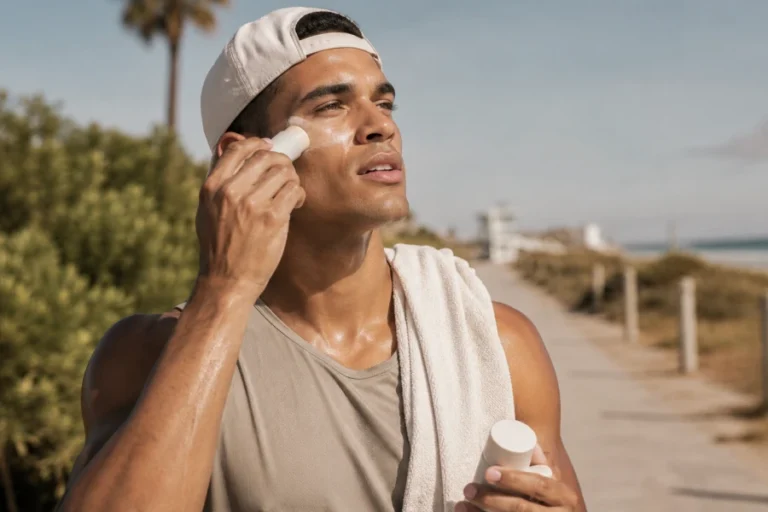
How much sunscreen to apply on your face can feel more complicated than it needs to be. Sunscreen can feel simple until you try to decide what amount actually covers the face. A small dot may disappear beautifully, but that does not guarantee generous coverage. The useful question is not whether the product feels elegant on skin. It is whether enough of it reaches the areas you intend to protect. Cheeks, forehead, nose, chin, ears, and the hairline all need attention. That is why visual measurements are more helpful than vague instructions. They turn an abstract recommendation into a repeatable morning habit. The two-finger sunscreen method gives many people an easy visual starting point. It is not about perfection; it is about avoiding the common under-application pattern. Once the amount feels familiar, daily protection becomes much more automatic.
Many people apply sunscreen as though it were a final skincare serum. They use a thin layer because they want it to vanish instantly. That instinct is understandable, especially under makeup or in warm weather. However, a barely visible amount may not create even coverage across the face. Try applying in two thin passes instead of one rushed swipe. The first pass can cover the broad areas of forehead, cheeks, and chin. The second can catch the nose, jawline, and places people often miss. This approach feels more controlled than dispensing a large blob at once. It also gives the formula a better chance to form a consistent layer. Comfort and adequate coverage can coexist when application is deliberate.
Makeup changes timing, but it does not remove the need for a full sunscreen layer. Apply your sunscreen after the skincare steps that suit your routine. Give it time to settle before adding foundation, concealer, or powder. A daily face SPF habit becomes easier when it sits in the same place every morning. Keep the bottle next to the products you use before leaving home. That visual cue reduces the chance of skipping it on busy days. If the finish feels too heavy, choose a formula better suited to your skin type. Do not solve texture discomfort by simply using less than you need. The right formulation can make a generous amount feel far more manageable. That makes consistency easier to protect throughout the year.
The two-finger visual is useful because it gives your hand a repeatable role. Dispense product along the length of two fingers, then divide it across the face. Some people prefer using shorter lines or two applications for better control. The exact technique can vary as long as the overall amount remains generous. Bring product to the ears, hairline, and neck when those areas are exposed. Use gentle spreading motions and avoid missing the sides of the face. A mirror can help at first, but habit soon takes over. The important part is not turning the method into a stressful ritual. It is creating enough structure that application stops being guesswork. That confidence makes daily protection feel less like another chore.
Real mornings include coffee, school runs, workouts, and last-minute changes. A sunscreen coverage routine should survive those interruptions. Keep one formula at home and another in your everyday bag when practical. Apply before you step into daylight rather than waiting until you feel sun on your face. If you are putting on makeup, allow a short settling period before coverage products. If you are bare-faced, use that same time to get dressed or pack your bag. Simple timing habits make the amount easier to maintain consistently. They also stop sunscreen from feeling separate from the rest of self-care. The best routine is the one you can perform when your morning is ordinary. That is where dependable protection begins.
A measurement becomes useful when you repeat it until it feels familiar. At first, the amount may look larger than what you usually use. That is often a helpful sign that your old routine was too sparing. Pay attention to finish, comfort, and whether the formula suits your climate. Adjust product choice if needed, but keep the coverage goal steady. A practical sun-protection basics mindset removes unnecessary complexity. It keeps the focus on a generous layer, exposed areas, and repeatability. You do not need a perfect morning to build a better habit. You only need a visual that makes the right amount easier to remember. Soon the movement becomes as ordinary as brushing your teeth.
At first, a generous amount can feel unfamiliar beside a minimal skincare routine. Give yourself time to learn the application that feels both thorough and comfortable. Dividing the amount into two light passes can make the process easier to manage. Use the same visual cue each morning until the movement feels automatic. Keep sunscreen within reach of the products you already use daily. That location is often more useful than relying on memory alone. If the finish feels wrong, change the formula instead of shrinking the amount. A better texture can make adequate coverage much easier to maintain. Practice including the hairline, ears, and areas that are easy to forget. These small details add up to a more intentional daily layer. With repetition, the amount stops looking excessive and starts feeling familiar. That is how a simple visual becomes a dependable protective habit.



Leave a comment