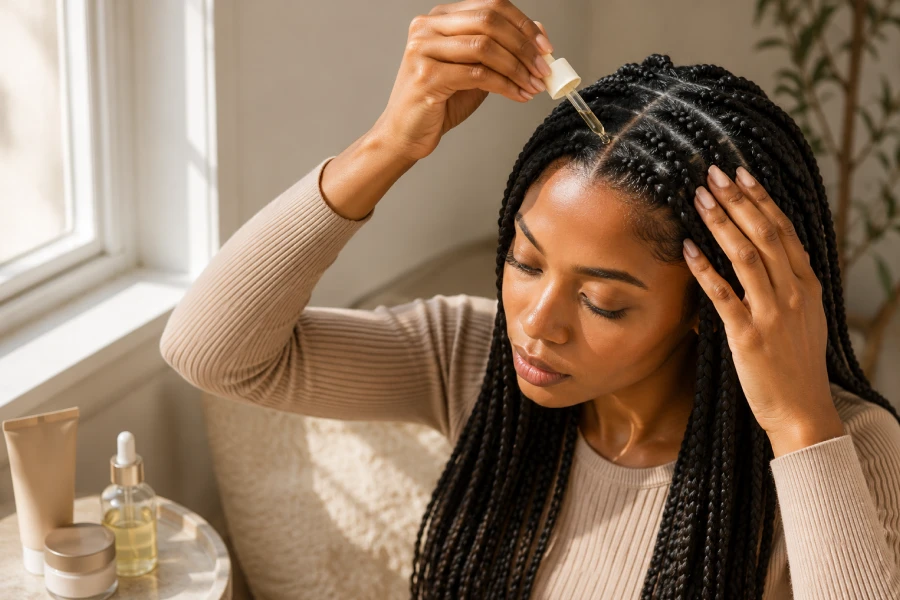
Dry scalp care for protective styles can feel more complicated than it needs to be. Protective styles can simplify daily hair care while making scalp access more intentional. When the scalp feels dry, it is tempting to coat every part with oil. That can bring temporary relief while creating heaviness and residue later. A better approach begins with reaching the scalp precisely and gently. The parts offer a natural pathway for lightweight moisture and targeted care. That means you can support comfort without disturbing the entire style. It also keeps the lengths looking polished for longer. A focused lightweight braid moisture routine respects both scalp and style. It uses smaller amounts placed where they actually matter. That level of control makes care feel simpler rather than more restrictive.
Start by checking whether the scalp feels dry, itchy, tight, or coated. These sensations can overlap, but the response should not always be identical. Dryness may call for a water-based scalp mist or light serum. A coated feeling may require less product and a clearer cleansing plan. Use a nozzle or dropper that reaches the parts without soaking the braids. Then press gently with fingertips instead of scratching at the roots. This keeps product near the scalp rather than across the entire hairstyle. It also protects the neat pattern that made the style feel easy. A little precision can prevent the cycle of adding product every day. That is especially useful during busy weeks when you need the style to last.
Oil can be helpful, but it is not the only answer to every dry feeling. Heavy oil applied repeatedly may trap sweat, lint, or styling residue near the roots. That can make the scalp feel less comfortable even when the hair looks glossy. Try water-based moisture first, then add a small amount of oil only when needed. A protective-style scalp routine works best when each layer has a reason. Use a light touch and let the scalp settle before applying more. Avoid saturating every part simply because one area feels dry. Targeted application makes it easier to see what actually helps. It also lowers the chance of buildup that requires an early wash. The goal is softness and comfort, not a visibly coated scalp.
A protective style benefits from a schedule rather than random rescue treatments. Choose one or two moments each week to assess moisture and scalp comfort. Use that time to refresh parts, clean the hairline, and check for residue. Keep products minimal between those check-ins unless discomfort appears. This protects the style from constant handling and unnecessary friction. It also helps you notice when a product is no longer working for you. A breathable scarf or bonnet can reduce dryness created by rubbing against bedding. Clean pillowcases and hair tools support the same goal quietly. The best routine often feels almost invisible when it is working. That makes it realistic enough to continue until your next appointment.
Every protective style needs an exit plan before product buildup becomes obvious. Do not wait until the scalp feels uncomfortable to think about cleansing. Plan gentle removal, thorough detangling, and a scalp reset around your schedule. A low-buildup scalp care approach makes the transition less stressful. It prevents layers of oil and cream from becoming a surprise on wash day. Use clear notes about what felt good during the style and what did not. Those notes help you choose lighter or richer products next time. They also make future appointments easier to prepare for. Protective styling becomes more sustainable when comfort matters throughout the cycle. Your scalp should not have to wait until removal day for relief.
The easiest routine is the one that keeps the style wearable and the scalp calm. Use targeted moisture, gentle fingertips, and less frequent heavy application. Respect signs of tenderness, persistent itching, or unusual flaking by seeking professional advice. For normal maintenance, stay consistent with between-appointment hair care. That means clean tools, protective nighttime habits, and small doses of the right texture. It also means giving your scalp space instead of constantly checking it. Over time, you learn which products suit your parts and which create residue. That knowledge is more valuable than a crowded product collection. Comfort becomes part of the protective style rather than an afterthought. The result is hair care that feels supportive from installation to removal.
Protective styles work best when the scalp feels included in the care plan. Keep the products light enough that you can maintain the style without coating it. Use access points at the parts rather than covering the entire head with oil. This protects both the look of the style and the comfort underneath it. It also makes wash-day preparation far less intimidating when removal time arrives. Pay attention to tenderness, persistent itching, or unusual flaking as separate signals. Those concerns may need professional support rather than more product. For ordinary dryness, a measured pattern of moisture and gentle handling usually helps. Keep your tools clean and nighttime protection consistent. These small habits extend the style without asking the scalp to tolerate buildup. The result is a maintenance routine that feels breathable and realistic. That is the kind of care protective styles deserve from start to finish.




Leave a comment