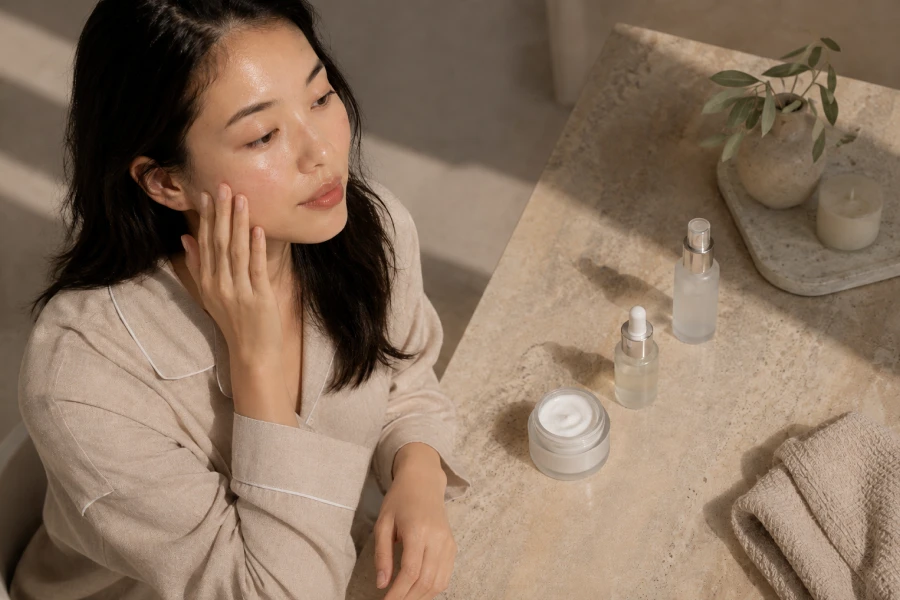
How to layer skincare for hydration can feel more complicated than it needs to be. Skincare becomes confusing when every bottle seems to promise the same glow. The answer is rarely adding every product in the order you bought it. Instead, each texture should have a clear job before the next arrives. Water-rich layers supply slip and immediate comfort near the beginning. Serums target specific needs without replacing the role of moisturizer. Creams help keep that comfort from disappearing into dry indoor air. This logic makes a routine easier to edit when your skin changes. A hydration order for skincare gives each product a reason to exist. It also reduces the tendency to rub endlessly until the face feels overloaded. Once you understand the roles, layering starts to feel surprisingly calm.
The first layer should usually be the one that feels most fluid. It may be a mist, essence, toner, or a simple watery serum. Apply it to skin that is lightly damp after cleansing. That creates a softer surface for the products that follow. The next layer can offer humectant support or soothing ingredients. Then a moisturizer helps hold the result in place. This simple arrangement respects how different textures behave together. It also keeps richer formulas from blocking lighter ones too soon. A routine can remain short while still feeling generous and effective. The goal is helpful order, not a complicated ceremony.
Texture tells you where products should go more clearly than marketing language. Thin liquids spread fastest and usually belong closest to clean skin. Gel serums can follow before creams, balms, or face oils. If you use an oil, consider whether it belongs over moisturizer for comfort. A lightweight moisture layers approach makes those decisions less abstract. The face should feel softly cushioned, not slick under every touch. When a layer pills, reduce the amount or give it more settling time. When a layer stings, simplify instead of forcing the sequence to continue. Your skin is offering feedback about compatibility in real time. Listening to that feedback improves a routine faster than copying anyone else.
More product is not always a sign of better hydration. A pea-sized amount of cream can be enough after well-applied watery layers. Use extra only on zones that repeatedly feel tight or rough. Press each step into the face with the flats of your hands. The motion should feel gentle, especially near the eyes and mouth. A damp-skin application habit makes light formulas work harder. It lets you use smaller amounts without leaving the face uncomfortable. Pause for a moment before deciding whether another layer is necessary. That pause separates true dryness from the urge to keep applying. It also makes the routine easier to manage on rushed mornings.
Morning layering has to cooperate with sunscreen and whatever comes afterward. Keep it light enough that complexion products do not slide or pill. Evening can hold a slightly richer finish when the day is done. That does not mean daytime needs no hydration at all. It simply means the final texture should match the day ahead. A skin barrier hydration plan can flex without losing its order. Use lighter textures in humid weather and add cream where cold air demands it. Keep actives separate when your skin feels sensitized or uncertain. The basics still matter most when everything else feels too complicated. A consistent sequence gives you a stable place to return to.
The best routine is not the longest or the most photographed. It is the one your skin accepts repeatedly without protest. Notice softness after cleansing, comfort under sunscreen, and resilience by evening. Those markers reveal whether the sequence supports you or simply looks impressive. Adjust one thing at a time when the season, schedule, or products change. That keeps your observations clean and your decisions less emotional. Good layering teaches patience because results build through repetition. It also gives every product a quieter, more useful role. Once the order feels intuitive, your routine stops feeling like a puzzle. It becomes a small daily system that supports skin without stealing attention.
A clear order gives you a way to evaluate new products without disrupting everything. Ask where the texture belongs before asking whether it is worth adding. That question keeps your routine from becoming crowded by duplicate steps. When a formula feels too rich, move it to evening or use less. When a formula feels too light, pair it with a cream instead of replacing it immediately. Each adjustment teaches you more about what your skin actually responds to. This makes product choices calmer and less dependent on novelty. You can preserve the same basic sequence even as individual bottles change. That stability is helpful when your schedule or climate becomes unpredictable. The logic remains simple: hydrate first, support next, and seal with intention. Once you know the roles, you can build a routine with fewer surprises. That quiet structure is what makes thoughtful layering so easy to maintain.




Leave a comment